Dental Implants
Tooth replacements that look, feel, and function like natural teeth — for one tooth or an entire arch.
Implant options and details
A clearer way to understand implant treatment.
Instead of one long list, implant planning is easier to understand in three parts: what we replace, how we rebuild support, and how we plan for long-term function.
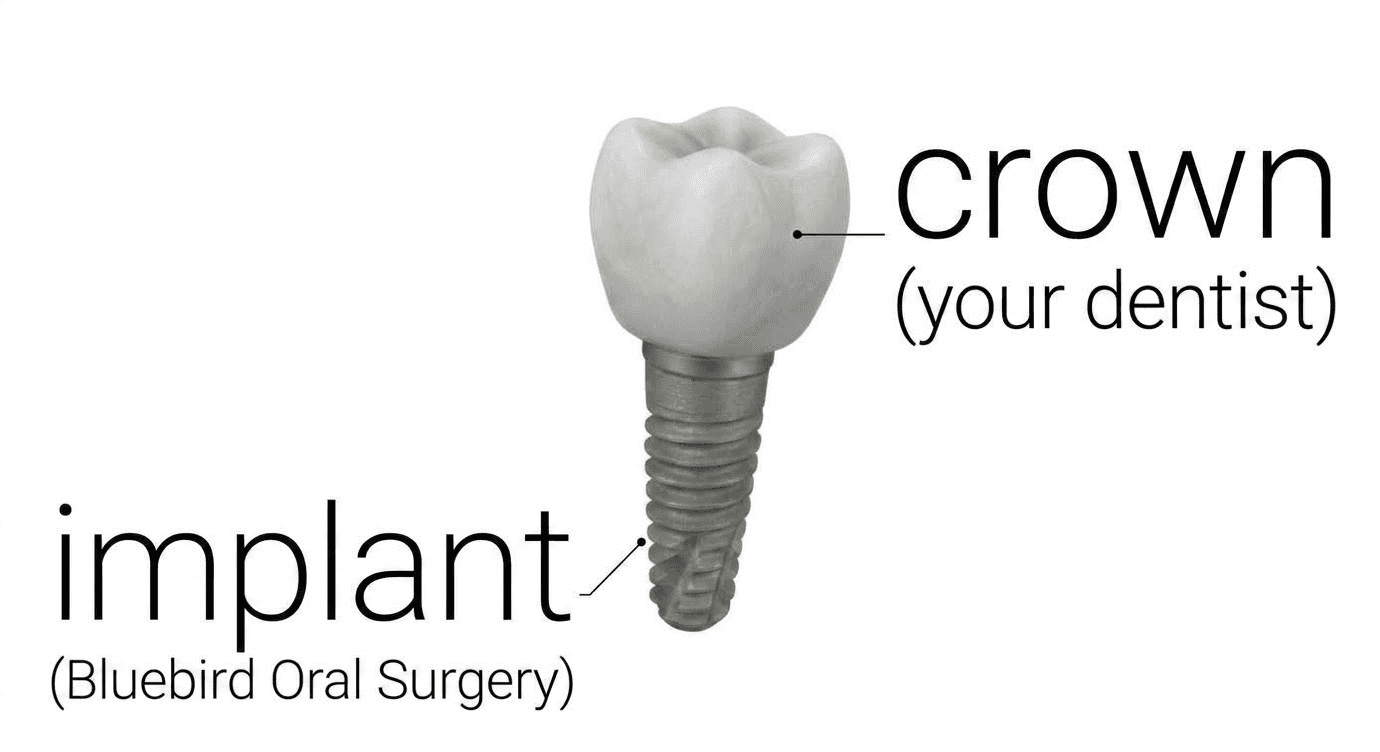
1
Single tooth, multiple teeth, or full arch
Implants can support a single crown, a bridge, or a full-arch restoration. The surgical plan depends on the number of missing teeth, bite forces, esthetic goals, and available bone.
2
Bone grafting, sinus lifts, and tissue support
When bone or soft tissue is limited, surgical rebuilding can create a safer foundation. This is where oral surgery training is especially important for predictable, durable implant outcomes.
3
3D imaging and restorative coordination
We use imaging and surgical planning to position implants around nerves, sinuses, bone shape, and the final tooth design. The goal is a restoration that is functional, cleanable, and built to last.
For more complex cases — bone loss, sinus proximity, trauma history, failed implants, or full-arch treatment — surgical repetition and specialty training become even more important.
Ready to schedule a dental implant consultation? Choose the implant-specific online scheduling option and our team will help you take the next step.
Schedule dental implant visit
Emergency dental implant planning
Lost or failing tooth? We help you move quickly — without skipping the right steps.
If a tooth is broken, failing, infected, or recently removed, timing matters. Our team can help coordinate surgical care, records, CBCT imaging, extraction if needed, implant planning, and the restorative dentist relationship that completes the tooth replacement.
Already working with a dentist?
If you have seen your dentist or prosthodontist within the past year, we can request records on your behalf and coordinate the implant plan with them.
Need a restorative dentist first?
If you are not currently working with a dentist, we are happy to recommend excellent options and help you get connected with the restorative team before or during the implant process.
Healthy and ready to move?
After a basic medical history review, some healthy patients can be booked for exam, CBCT, implant placement, and extraction if needed. Others may prefer an evaluation visit first — both pathways are okay.
The goal is not just speed — it is the right sequence: records when available, CBCT imaging, surgical planning, restorative coordination, and a tooth replacement plan that is durable and predictable.

Why surgical training matters
Surgery is all we do — and repetition matters.
Some providers who insert implants also handle the restorative ('tooth') side. At Bluebird, our focus is surgical care: implant placement, bone grafting, sinus anatomy, sedation... That focused repetition and specialty training make our team the go-to for predictable, durable implant foundations.
Surgical focus every day
Predictable, durable foundations
Complex-case expertise
Meet our oral surgeons
Implant treatment overview
Planning your implant
Implant options and details
Dental Implants details
To replace a single tooth
To replace several teeth
To replace all teeth
Surgical Specialists for Routine and Complex Cases
Mastery of the Implant–Bone–Gum Interface
We Work With Your Dentist as Close Teammates
In-House Digital Planning & 3D Printing
Realistic Outcomes & Long-Term Maintenance
Full-Arch Implants: Focused on the Surgery
Typical long-term success rate of over 95% at 10+ years. Risk factors include smoking, poorly controlled diabetes, poor oral hygiene, or untreated gum disease. Peri-implantitis is a form of inflammation that can affect the tissues around an implant, similar to gum disease.
Only the Highest-Quality Implants
We use Straumann implants, backed by decades of clinical research, offering outstanding strength and bone integration, advanced surface treatments for faster healing, and the long-term durability that is essential in full-arch restorations.
Advanced Technology, Adapted to You
We use the latest digital workflow tools — photogrammetry for ultra-precise implant positioning, in-house 3D planning and surgical-guide fabrication, and seamless integration with your restorative dentist’s software. Because not every patient needs a fully digital workflow, we adapt our process to you, blending new technology with proven traditional techniques for predictable outcomes.
Options Even With Severe Bone Loss
If you’ve been told you don’t have enough bone for implants, we can help. Our surgeons have advanced training in zygomatic implants anchored in the cheekbone, transnasal and pterygoid anchorage for added stability, and sinus lifts and complex bone grafting to rebuild what’s missing. We’ll evaluate your 3D scans and discuss all viable paths to get you back to function — even if you’ve been turned away elsewhere.
Comfort With Physician-Led Anesthesia
For full-arch treatment, we partner with board-certified physician anesthesiologists to provide deep sedation or general anesthesia, total intraoperative comfort, and minimized post-op nausea and discomfort. You’ll wake up with your implants placed and your surgical experience behind you — calm, safe, and cared for.
A Long-Term Commitment, Not a Sales Pitch
We don’t pressure patients into full-arch treatment, and we’ll tell you when it isn’t the right option. We plan for long-term success rather than short-term cosmetic wins, recognizing that most full-arch patients will need some surgical or prosthetic revision over time. Our goal is to plan for your next 20, 30, even 50 years of function and follow-up — so you can chew, smile, and live with confidence.
Zygomatic Implants for Severe Upper-Jaw Bone Loss
If you’ve ever been told you don’t have enough bone for dental implants, zygomatic implants may change everything. Bluebird Oral Surgery is one of the only practices in Central Oregon offering this advanced procedure right here in our state-of-the-art office. Zygomatic implants anchor in the cheekbone instead of the upper jaw, providing exceptional stability for patients with severe upper-jaw bone loss who have been told they are not candidates for traditional implants.
They are often the best solution for individuals who wear a loose upper denture, patients needing a strong foundation for a permanently attached prosthesis, and people with bone loss from long-term tooth loss, trauma, or failed implants. With zygomatic implants, you can regain confidence in your bite and appearance, say goodbye to loose dentures, avoid invasive bone grafting, and get the stable, functional smile you deserve — serving Bend, Redmond, Sisters, Prineville, La Pine, and beyond.
Why Choose Bluebird for Dental Implants?
Many dentists and specialists place dental implants to help patients replace missing teeth. At Bluebird Oral Surgery, we believe our surgical focus, team-based planning, implant systems, and guided workflow give patients a strong foundation for long-term success. We place implants all the time, our three surgeons share expertise in one office, we use one of the most researched and prominent implant brands, and every implant is placed with a 3D-printed surgical guide for precise, predictable positioning.
Dental Implant Q&A
Why should I see an oral surgeon for an implant?
Dental implants are surgical procedures, and oral surgeons focus on surgery every day. Our team plans around bone, gum tissue, anatomy, healing, and long-term restorative goals so the implant is placed in the best possible position for your final tooth or teeth.
How does having three surgeons in one office help?
Our surgeons are able to talk through cases together, review challenges, and learn from one another. That shared experience is especially valuable for complex anatomy, esthetic areas, full-arch treatment, revision cases, or anything that benefits from more than one expert perspective.
Why does the implant brand matter?
Implant systems are not all the same. We use one of the most researched and prominent implant brands because long-term data, component quality, and restorative support matter when planning treatment that should last for many years.
What is a 3D-printed surgical guide?
A surgical guide is a custom 3D-printed guide made from digital planning. It helps direct the implant into the planned position, angle, and depth. We use guides for every implant because precision at surgery helps set up a better final restoration.
The Dental Implant Process
01 Personalized Consultation
Whether you’re missing a single tooth or need a full-arch solution, we begin with a comprehensive evaluation that includes 3D imaging, a full health history, and a real conversation.
02 Surgical Planning
Your smile, needs, and budget are unique. We use advanced scans, photography, and guided planning tools to map out your procedure in detail.
03 The Placement
Whether you’re replacing a single tooth or starting a full-arch case, implant placement is precise, minimally invasive, and designed to keep you comfortable.
04 Healing + Final Smile
As your implant fuses with the jawbone, we stay closely involved through healing. When you’re ready, your restorative dentist will complete your final smile.